eSIM vs roaming: which is cheaper in 2026
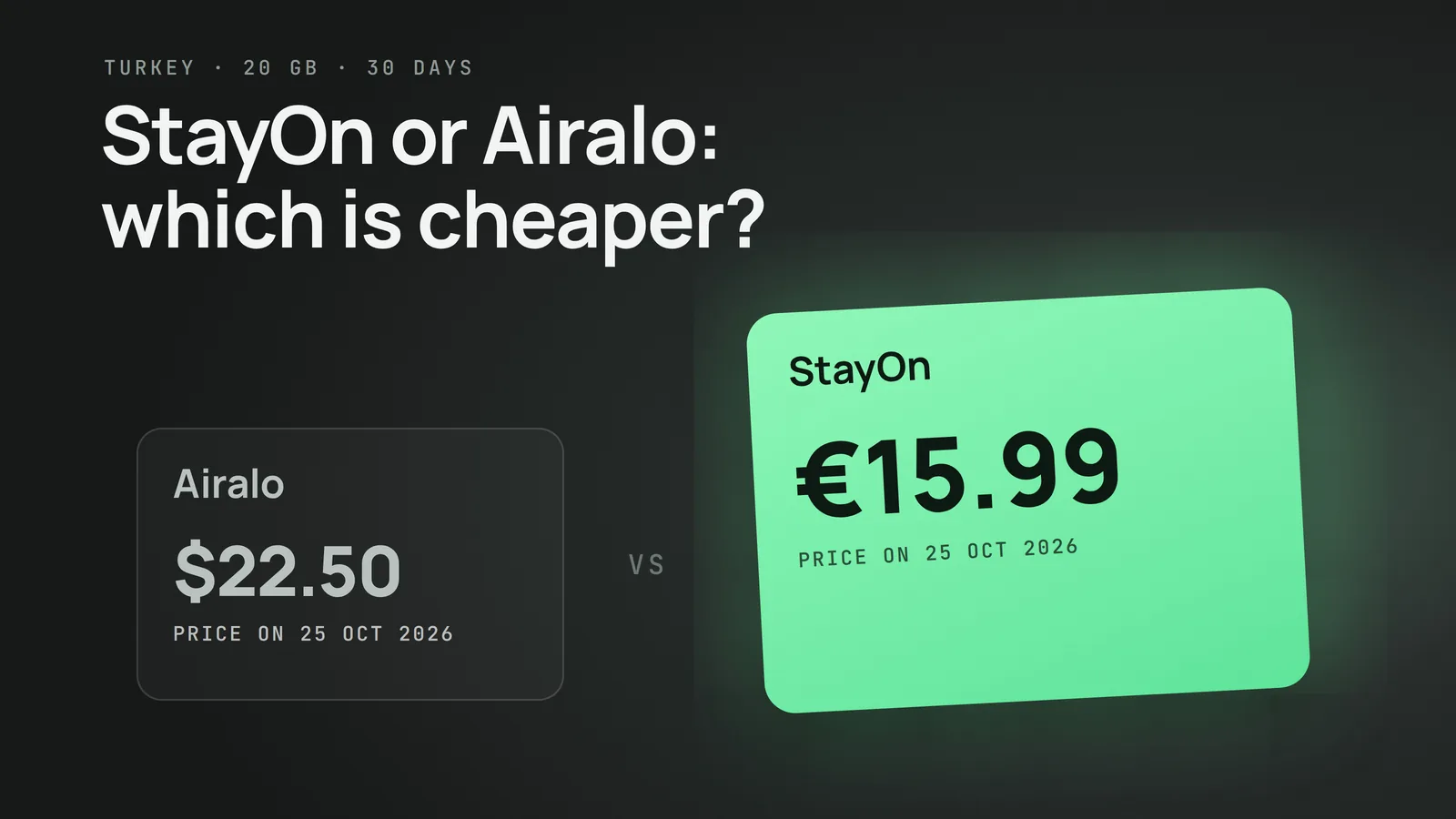
The arithmetic: when a travel eSIM beats roaming, where your operator wins, and why a month-long stay calls for a local contract.
Roaming has come down in price, but it is still built so that on a short trip you pay for access rather than for data. Here is the arithmetic, honestly, from both sides.
How operators charge
Home operators sell two different products, and people mix them up.
A daily bundle. A fixed amount for each day you use data abroad, usually €2–5 with a data cap. The logic is simple: a week costs €15–35 whether you used a gigabyte or two hundred megabytes.
No bundle at all. Per-megabyte international rates. This is the worst case: outside the EU, a couple of photos syncing to the cloud can push the bill past a hundred euros. That is exactly what happens when the phone attaches to a network by itself and no bundle is active.
Where the line falls
The question is not "cheaper in general" but "cheaper on my trip".
- 3–10 days. Daily charges add up fast; a travel eSIM is almost always cheaper, usually by two to four times.
- One night or a layover. Sometimes it is simpler to switch roaming on for a day and forget it. The absolute difference is small.
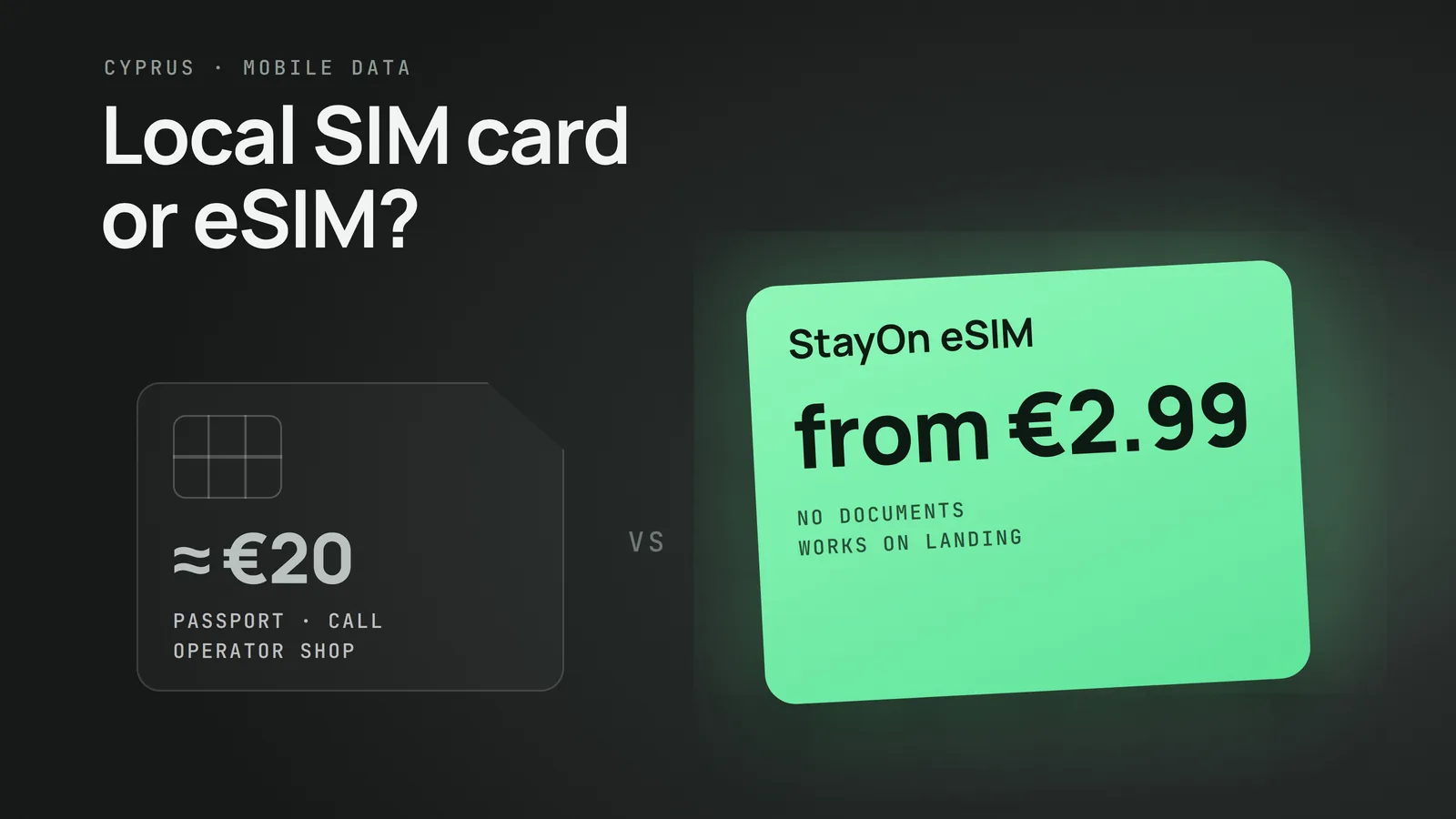
- A month or more in one country. A local contract usually beats both an eSIM and roaming.
- A multi-country route. Roaming is billed per country; a regional plan is one allowance for all of them.
What roaming does better
Two things, honestly.
Your number. On roaming you keep your usual number for calls and texts. Our plans are data only — though nobody removes your home SIM: it stays as a second line, and code messages still arrive.
Nothing to do. Roaming switches itself on. An eSIM asks for five minutes at home before you fly.
What an eSIM does better
Predictability. You know the amount before the trip, and it does not depend on how many times the phone refreshed a feed.
No surprise. The expensive part of roaming is rarely the tariff — it is the forgotten switch. The phone attaches at the airport, background sync does its work, and the bill arrives a week later.
Multi-country pricing. One regional plan instead of a separate charge in every country.
Check your own case in a minute
- Find the daily bundle price for your destination in your operator's app.
- Multiply by the number of days.
- Compare with the price of a plan for that country here.
- Add the risk to the roaming side: if the bundle is not activated in time, billing falls back to international rates.
In short
- Up to two weeks, an eSIM is usually two to four times cheaper.
- For a single day the difference is small and roaming is simpler.
- From a month in one country, price up a local contract.
- Roaming keeps your number — but so does an eSIM, on the second line.
- The main roaming risk is not the tariff, it is the bundle you forgot to enable.